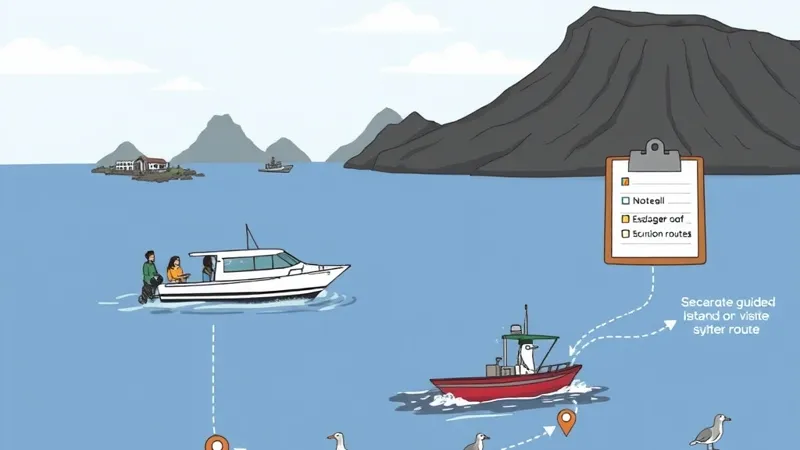
Why do Galápagos itineraries change?
Galápagos itineraries change because the Galápagos National Park authority controls authorized visitor-site access and assigns visit sites and landing points. An advertised land-based itinerary is therefore provisional, not a promise of particular landings. No operator can guarantee an exact itinerary or wildlife sightings.
Park permissions and restrictions are separate from weather, rough seas, port restrictions, safety decisions and transport disruptions. Any of these can affect an excursion, but they should not all be described simply as a Park reassignment.
The Galápagos National Park Directorate is the official source for visitor rules and tourism-management information. Galapagos By Land is an independent editorial and affiliate comparison guide, not an operator; we do not run tours.
How does the National Park assign access to visitor sites?
Access depends on the applicable tourism permissions and visitor-site rules, not just what a provider advertises. There is no basis for treating every land-based activity as part of one universal daily allocation process.
For booking purposes, separate these responsibilities:
- Authority authorization: Park-controlled site access, permitted activities and applicable restrictions define what may be offered. The relevant authorization or notice matters more than a generic itinerary description.
- Provider scheduling: The provider arranges excursions within its permissions and operating conditions. Ask which authorized vessel or service will deliver a boat excursion and whether its proposed route includes the advertised site.
- Traveler preferences: You can request particular activities or destinations. A request does not create permission, reserve an otherwise unavailable landing or override a restriction.
For land-based day excursions, ask the provider to identify the authorization and route applicable to your booking. A hotel-based package is a collection of services, not evidence that every listed landing is confirmed. Specific procedures should be supported by the applicable Park document rather than inferred from a sales page.
Why does the National Park restrict access to some sites?
Conservation, visitor management and site-specific protection can justify access limits. However, a changed excursion is not automatically evidence of a breeding-season restriction or a site closure.
UNESCO’s Galápagos Islands World Heritage listing, particularly its “Outstanding Universal Value” and “Protection and management requirements” sections, provides conservation context. Actual restrictions need the relevant Park notice, including its scope and effective period.
Heritage fact box: The property’s original World Heritage inscription and its subsequent extension are separate milestones. UNESCO recognition describes the protected property’s international significance; it is not a booking system or the mechanism that assigns excursion sites. The listing’s inscription and extension fields distinguish those events.
Which parts of a land-based itinerary can change?
Excursions, transfers and accommodation have different decision-makers, although disruption to one can affect the others.
- Hotel nights: The accommodation provider and package organizer manage reservations. Confirm the property, town, room arrangements and substitution terms. Santa Cruz is the island; Puerto Ayora is a town on it. San Cristóbal is the island; Puerto Baquerizo Moreno is its principal town. An island name alone does not establish a convenient hotel location.
- Inter-island passenger speedboats: The carrier manages the service, subject to port and safety conditions. Confirm the ports, baggage arrangements and who handles a missed connection.
- Guided boat excursions: The provider schedules the trip within applicable Park permissions and operating conditions. Confirm the proposed site, activities, vessel arrangements and alternatives.
- Independently accessible visits: Access depends on the particular location and activity. Check opening conditions, entry arrangements and whether your intended activity requires a guide or authorization.
A Park-controlled excursion is not the same service as a passenger speedboat transfer. Neither accommodation nor transport is immune to disruption. Our hotel guides and arrival and transfer guide help separate these planning decisions.
How do weather and speedboat connections affect daily plans?
Sea conditions and safety restrictions can interrupt a crossing even when an excursion’s Park permission has not changed. Rough crossings can also make an otherwise workable itinerary uncomfortable.
For Puerto Ayora–Puerto Baquerizo Moreno and Puerto Ayora–Puerto Villamil, request a route-specific estimate from the carrier. Separate time underway from check-in, boarding, disembarkation and onward travel. An advertised crossing duration is not a door-to-door connection allowance.
INOCAR, Ecuador’s oceanographic authority, provides marine information. Its information is not a substitute for the carrier’s operating confirmation or instructions from the relevant port authority.
Editorial planning advice: Leave a buffer before an international connection and avoid a tight same-day speedboat-to-flight plan. This is risk-management advice, not a Park rule. Ask who bears the cost if a delayed crossing causes a missed flight or an additional hotel night.
What should travelers confirm before booking?
Get a written description of what is included, what remains indicative and how changes will be handled.
- Which named sites are proposed, and what does “confirmed” mean in this booking?
- Which authorization and vessel arrangements apply to each guided boat excursion?
- Where are the hotels, and who approves accommodation substitutions?
- Who arranges harbor transfers and handles missed connections?
- What swimming ability, walking fitness or boarding mobility does each activity require?
- When and how will itinerary updates be communicated?
- What happens if a substitute changes the activity substantially?
- What cancellation, substitution and refund terms apply?
A Park-related change does not automatically create or remove refund rights. Those depend on the booking terms, circumstances and applicable law.
Use our island-hopping comparison to compare inclusions and responsibilities, not just destination names. Current offers and prices belong in the linked listings and GetYourGuide widgets. Mainland Ecuador flights to the islands are never included in the multi-day land tours covered by this site.
Affiliate disclosure: We may earn a commission from bookings through affiliate links. We remain an independent guide, not the service provider.
What should you do if a confirmed excursion site changes?
Ask for the reason and the revised plan before deciding whether the alternative meets your needs.
- Clarify the cause: Is this a Park restriction, an operating issue, weather or a provider scheduling change? If a restriction is cited, ask which notice or instruction applies.
- Obtain the replacement details: Request the site, activities, boarding arrangements and expected return time in writing.
- Compare practical differences: Consider dry versus wet landings, walking terrain, snorkeling access, boat time and accessibility. Substitutes are not automatically equivalent.
- Check downstream effects: Review transfers, hotel arrangements and any separately booked activities.
- Review your options: Ask the provider to explain its applicable terms and any available remedy.
The provider should communicate changes clearly, but cannot override a Park restriction or promise a replacement wildlife encounter.
Can a particular site or wildlife sighting be guaranteed?
No operator can promise access beyond applicable Park permissions and operating conditions, and wildlife sightings are frequent but never guaranteed.
The Charles Darwin Foundation provides ecological context about Galápagos species and habitats. A species’ documented habitat is not a forecast that you will encounter it during a particular excursion.
Express preferences through activities: snorkeling opportunities, birdwatching time or walking on manageable terrain. You can also name a preferred site or species, provided you understand that neither becomes a guaranteed inclusion simply because it appears in an itinerary or photograph.
What else should travelers know about itinerary changes?
The most useful distinction is between a booking preference, an authorized activity and an operationally possible departure.
Can I select sites before booking, or pay more to guarantee access?
You can request sites and compare proposed routes. Paying more does not override Park permissions, restrictions or safe operating conditions, and cannot guarantee a landing.
When will I receive the final plan?
Ask the provider for its communication process and expected update timing. There is no universal confirmation deadline established here, and even a communicated plan can change.
Will an excursion change also change my hotel?
Not necessarily. A local substitution may leave accommodation unchanged, while a disrupted inter-island connection can affect hotel nights. Ask the organizer to confirm the consequences.
Does an itinerary change entitle me to a refund?
Not automatically. Refunds depend on the applicable booking terms, the nature of the change and relevant law. Request the provider’s explanation in writing.
Do independently accessible sites use the same allocation process?
Do not assume so. Rules vary by location and activity. Check the requirements for the specific visit rather than applying guided boat-excursion arrangements to every land visit.
Sources
These sources have different roles; conservation context should not be mistaken for an operating notice or a confirmed booking.
- Galápagos National Park Directorate: visitor rules, tourism-management documents and site-specific notices. A temporary restriction must be read within its stated scope and effective period.
- UNESCO — Galápagos Islands: Outstanding Universal Value, Protection and management requirements, and the property’s inscription and extension records; heritage and conservation context, not excursion allocation.
- INOCAR: marine information. Carrier-specific journey estimates and operating confirmations remain separate.
- Charles Darwin Foundation: ecological research and species information, not wildlife-sighting guarantees.