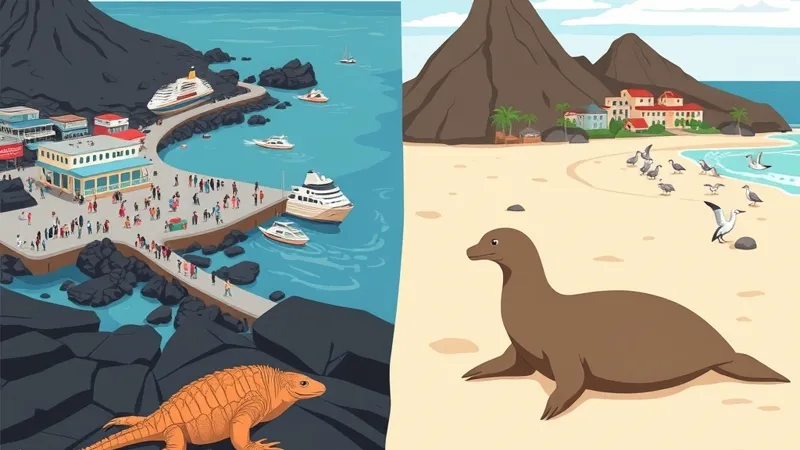
What wildlife can you see for free around these towns?
Around Puerto Ayora, look for marine iguanas, Sally Lightfoot crabs, pelicans and other coastal birds. Around Puerto Baquerizo Moreno, sea lions, marine iguanas and shorebirds are possible waterfront encounters. Wildlife sightings are frequent but never guaranteed; no operator can promise them.
Free means no separate attraction or tour charge where access permits. It does not remove Galápagos entry requirements or accommodation and transport costs. Public waterfront walks also differ from regulated protected-area visits: consult the Galápagos National Park Directorate for visitor guidance and site access.
For a quick comparison:
- Puerto Ayora waterfront: possible iguanas, crabs and pelicans; town walking access, with working areas and passenger operations to respect.
- Tortuga Bay: possible iguanas and coastal birds; a dedicated walking outing subject to visitor-site access conditions.
- San Cristóbal waterfront beaches: possible sea lions and coastal birds; access depends on beach entrances and animals leaving room to pass.
- Punta Carola and Cerro Tijeretas: possible coastal wildlife; trails require more preparation and attention to protected-area restrictions.
Where can you look on Puerto Ayora’s waterfront?
The fish-market waterfront, coastal rocks and main passenger pier offer places to scan for wildlife without purchasing an excursion.
Start at the main passenger pier, observing from public pedestrian areas without obstructing boarding. Follow the waterfront along Avenida Charles Darwin toward the fish market, stopping where public paths overlook coastal rocks. Return the same way or continue toward the research-station area if access and daylight permit.
Look for pelicans, marine iguanas and Sally Lightfoot crabs; the Charles Darwin Foundation provides species and conservation resources. Sea lions may appear too, while animals beneath the pier are less predictable and harder to identify through glare or moving water.
The fish market is a workplace, not a wildlife performance. Animal presence changes with activity and conditions. Keep clear of workers, equipment and customers, and never offer food or encourage animals toward people.
Can you visit Tortuga Bay and the research-station area without a paid tour?
These places need separate planning: Tortuga Bay’s coastal walk is not the same visitor experience as research-station facilities or a managed tortoise exhibit.
For Tortuga Bay, the access trail runs from the town-side entrance to the ocean-facing beach, Playa Brava. Treat it as a dedicated outing rather than a brief waterfront detour. Check permitted entry hours, registration, guide requirements and closures with the National Park before setting out.
Marine iguanas and coastal birds may be encountered along the coast. The beach’s name does not promise turtle sightings. Walking access also does not mean every stretch of water is suitable for swimming.
Near the Charles Darwin Research Station, distinguish coastal beach access, research facilities and managed tortoise-display areas. Do not assume they share admission arrangements or allow independent entry everywhere. Consult the Foundation’s facility information when planning a visit. Tortoises in managed conservation exhibits are not free-ranging wildlife encounters.
Where can you watch sea lions around Puerto Baquerizo Moreno?
The malecón, Playa de Oro and Playa Mann are places to look for Galápagos sea lions and coastal birds, although animals may be absent from any particular stop.
Use the main passenger pier as your starting point and build an out-and-back waterfront walk:
- Malecón: follow paved pedestrian sections, watching for uneven edges and busy crossings. Shade varies; keep boarding and working areas clear.
- Playa de Oro: continue along the waterfront toward the beach. Expect a transition from pavement to sand, and use an entrance only when animals leave sufficient space.
- Playa Mann: continue farther along the town’s coastal streets. Expect pavement followed by sand; do not rely on continuous shade or an unobstructed beach entrance.
Choose your turnaround point according to heat, daylight and mobility rather than a tight schedule. When watching sea lions, leave their route between land and water open. Never position yourself between a pup and an adult or crowd an animal for a photograph.
Which walks extend beyond the San Cristóbal waterfront?
Punta Carola and the trails toward Cerro Tijeretas offer longer coastal outings, with more uneven terrain than the town promenade.
Punta Carola is a beach-focused option where sea lions, marine iguanas and coastal birds may be present. Prepare for sandy or uneven footing and exposed stretches rather than expecting a shaded promenade.
Cerro Tijeretas is a trail-and-viewpoint outing involving uphill walking and steps. Frigatebirds are possible, not assured. Viewpoint walking and snorkeling are separate activities: entering the water requires a suitable assessment of conditions, and equipment or assistance can involve spending.
Treat entrances and signage around these visitor sites as access controls, not invitations to roam beyond marked paths. Confirm protected-area boundaries, independent-access rules and closures with the National Park. Do not assume that every connecting trail or nearby beach is open simply because another visitor used it.
When should you walk, and what should you carry?
Choose a time for comfortable temperatures, daylight and permitted access—not a supposedly guaranteed wildlife window. Tides, sea conditions and animal behavior change what is visible.
Carry drinking water, sun protection and footwear suitable for the route. Secure food rather than leaving bags open beside animals.
Waterfront walks are easier to shorten when heat builds. Tortuga Bay requires greater commitment once you leave town; Punta Carola involves beach terrain, while Cerro Tijeretas adds climbing and steps. Coastal rocks can be slippery: observe from established paths instead of stepping closer for a clearer photograph.
What rules apply to independent wildlife watching?
Independent visitors must respect wildlife separation, marked routes and access restrictions just as guided visitors do. Follow the National Park’s published minimum viewing distance and allow more space whenever an animal’s behavior or location requires it.
- Never touch, feed, chase or surround wildlife.
- If a sea lion blocks a path, stop and wait or take a permitted alternative; do not squeeze past.
- Give nesting birds ample room and avoid approaching nests.
- Avoid flash photography and never use noise to provoke a reaction.
- Respect barriers, closures and staff instructions.
Permitted town-area walking is different from a regulated excursion. Visit sites and landing points are assigned by the Galápagos National Park. No operator can promise a specific islet, site or exact itinerary; weather and park rules determine what is possible.
How do free walks fit into an island-hopping trip?
Use short waterfront walks as flexible activities near your hotel, and reserve longer trails for days without tight departure connections.
Our independent hotel comparisons can help you consider town location and walking convenience. Check inter-island transport logistics separately: passenger speedboats are paid transfers, not part of a free wildlife outing, and crossings can be rough.
Free walks reduce optional activity spending, not mandatory arrival costs. Mainland flights from Quito or Guayaquil are never included in the multi-day land tours covered by this site.
For a trip combining independent time with organized excursions, compare land-based island-hopping options. Galapagos By Land is an independent editorial guide, not a tour operator. Affiliate widgets on relevant tour pages provide live prices and ratings; we do not run the tours.
What should visitors know before setting out?
Both towns offer wildlife-watching opportunities without buying a wildlife tour, provided you stay within permitted public access.
Do waterfront walks need a guide, and does free remove entry requirements?
Ordinary public waterfront walks do not require purchasing a guided excursion. Protected visitor sites may have different rules. Free walking does not exempt visitors from Galápagos entry requirements or mandatory arrival charges.
Where might you see sea lions without booking a tour?
Look along Puerto Baquerizo Moreno’s malecón and around Playa de Oro and Playa Mann. Presence changes, and no beach guarantees sightings. If an animal blocks your route, wait or use a permitted alternative.
Are giant tortoises or blue-footed boobies guaranteed near town?
No. Neither species is guaranteed on a town walk. Managed tortoise exhibits must be distinguished from wild encounters and may have separate admission or guide arrangements.
Do Tortuga Bay and research-station facilities have identical access rules?
No. The beach trail, nearby coastal areas, research facilities and managed exhibits are distinct places. Consult National Park and Foundation information rather than assuming one access policy covers everything.
Can you explore both towns without buying a wildlife tour?
Yes, public waterfront walks can form part of an independent visit. Transport between the islands remains a separate paid journey, and protected-area access must be checked individually.
Sources
Official conservation and visitor-information sources support planning and species identification; consult their relevant guidance before entering regulated sites.
- Galápagos National Park Directorate: visitor conduct, protected-area access, site restrictions and closures.
- Charles Darwin Foundation: species identification, conservation research and research-station visitor information.
- UNESCO: Galápagos Islands: conservation context and the islands’ World Heritage significance.