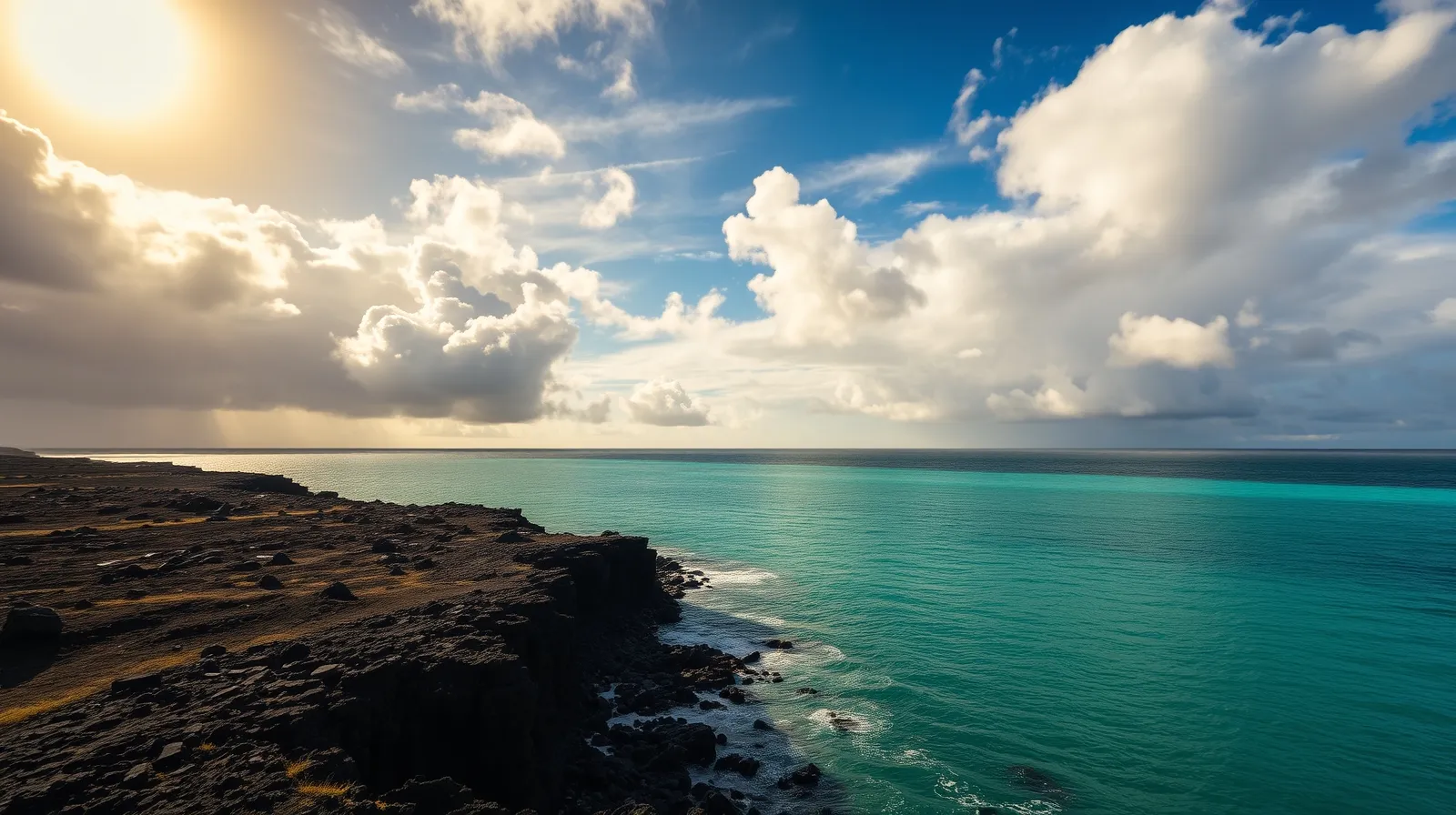
So when is the best time to visit the Galapagos?
Any month — what changes is the trade-off, not whether the trip works. The archipelago has two seasons, not four. In the warm season (roughly January to May) the sea is warmer, the sky opens up more, and rain arrives as short convective downpours; it is also the pricier window around Christmas and Easter. In the cool season (roughly June to December) the trade winds strengthen: the air and the sea get cooler, the highlands sit under a grey drizzle called the garúa — and the water fills with life, because cooler currents bring up nutrients.
That is the honest answer in two sentences. What no season gives you is a guarantee: no month makes a specific animal certain, no month makes every boat crossing flat. The National Park assigns the visitor sites, and the sea decides how the crossings feel. Everything below is climate averages and stated seasonality from the sources — probabilities, not promises.
The two seasons, as the scientists define them
Our reference is the Charles Darwin Foundation, which has studied the islands' climate longer than anyone (Datazone climatology, read on the primary source):
- Warm season — January to May. The south-east trade winds weaken, the influence of the cold Humboldt Current and the equatorial upwelling drops, temperatures rise and rain falls as convective showers.
- Cool season — June to December. The winds strengthen and cooler temperatures dominate the archipelago.
Travel brochures often shift the boundary by a month — you will read "warm and wet December to May, garúa season June to November". Both framings describe the same two regimes; when a boundary month matters for your planning, we go with the Charles Darwin Foundation's dates.
What the garúa actually is
The garúa is the signature weather of the cool season: a persistent layer of low cloud with continuous drizzle that sits on the windward slopes of the islands' higher parts — while, at the same time, the rest of the archipelago gets almost no rain at all.
That rain-shadow effect is why one island can feel like two climates in one day. It splits the terrain into three bands: humid highlands, arid lowlands, and a transition zone between them. So a grey, misty morning in the Santa Cruz highlands and a dry, sunny afternoon on the coast are not a forecast gone wrong — they are the system working exactly as described.
The warm season (January–May) in numbers
Climate normals for Puerto Ayora (1990–2020, as reported — read them as averages, never as a forecast for your week):
- March is on average the warmest month, with daytime highs around 30 °C and night lows around 25 °C.
- February is on average the wettest month, at roughly 132 mm of rain — out of an annual average of about 566 mm, which tells you how concentrated the wet months are.
- The sea is at its most inviting: indicatively 24–27 °C, comfortable for long snorkelling sessions without a wetsuit.
The showers are typically brief and convective — rain, then sun again. The practical catches are human, not meteorological: Christmas and Easter are the high-price windows, so if you travel then, book earlier and budget more.
The cool garúa season (June–December) in numbers
Same source, same caveat — averages, not promises:
- September is on average the coolest month, with daytime highs around 26 °C and night lows closer to 20 °C. Cool for the equator, not cold.
- September is also on average the driest month in the lowlands, at roughly 5 mm — the drizzle stays up in the highlands.
- The sea drops to indicatively 19–22 °C, and colder still off the west side of Isabela, where deep water rises to the surface.
That colder water is the season's whole bargain: the upwelling carries nutrients, and more nutrients mean more life in the water — which is exactly why many divers and snorkellers prefer these months. The practical consequence: a wetsuit is recommended for snorkelling and diving, and many tours do not include one in the price. Ask before you assume.
Wildlife: why nobody honest promises sightings
Wildlife in the Galapagos is seasonal, and the seasons genuinely shift the odds — cooler months bring richer water, warmer months bring calmer, clearer snorkelling conditions. But better odds are still only odds. The animals are wild, the National Park decides which visitor sites your itinerary uses, and the ocean decides how the crossings go.
So treat any "guaranteed sightings" claim as a red flag, whoever makes it. What a good land-based itinerary does is stack the probabilities in your favour: several islands, several habitats, several days. Our island-by-island comparisons look at exactly that — which itineraries cover which habitats, and what the price actually includes.
What the season does — and does not — change in your budget
Two costs are identical in every month of the year: the $200 Galapagos National Park entrance fee per foreign adult (cash, on arrival) and the $20 Transit Control Card issued at the mainland airport — $220 per person on top of any tour, as we explain in our entrance fee guide. The 60-day rule does not change either: tourists may spend at most 60 days per calendar year in the islands, cumulative across entries.
What does move with the calendar is demand: the Christmas and Easter windows of the warm season are the most expensive time to book flights and rooms. The multi-day land tours in our census start from $639 (prices verified August 2026 from the operators' own product data — they change, so treat every figure as "from"). Flights from the mainland are never included.
Browse Galapagos land tours, island by island
Frequently asked questions
What is the best month to visit the Galapagos?
There is no single best month. January to May is warmer, with warmer sea and short downpours; June to December is cooler, with grey drizzle in the highlands and richer, colder water. Pick the trade-off that fits how you travel — and avoid the Christmas and Easter price peaks if budget matters.
What is the garúa?
The typical weather of the cool season (roughly June to December): a persistent layer of low cloud with continuous drizzle on the windward high parts of the islands, while the lowlands stay almost completely dry.
Is the sea cold in the Galapagos?
It depends on the season. In the warm months the water is indicatively 24–27 °C; in the cool months it drops to indicatively 19–22 °C, and it is colder still off western Isabela. In the cool season a wetsuit is recommended for snorkelling and diving — and many tours do not include one.
Does it rain a lot in the rainy season?
By most tropical standards, no. Puerto Ayora averages about 566 mm of rain per year, with February the wettest month at roughly 132 mm — usually short convective showers, not day-long rain. September averages around 5 mm in the lowlands.
Can I be sure of seeing specific animals in a given month?
No — and no honest operator will promise it. Seasons shift the probabilities: cooler months bring nutrient-rich water and more marine life, warmer months bring calmer snorkelling conditions. But the animals are wild, the Park assigns the visitor sites, and no sighting can be guaranteed.
Do the entrance fees change with the season?
No. The $200 National Park fee per foreign adult and the $20 Transit Control Card apply every day of the year — $220 per person on top of any tour — and the 60-day annual limit applies in every season too.
Sources
Figures verified in August 2026 and re-checked against the sources when this page is updated.
- Charles Darwin Foundation — Datazone climatology — season definitions, garúa mechanism, rain-shadow zones
- Climate-data.org — Puerto Ayora climate normals 1990–2020 — temperature and rainfall monthly averages, reported as averages
- Galapagos National Park — galapagos.gob.ec and the Galapagos Governing Council — entrance fee, Transit Control Card and the 60-day rule