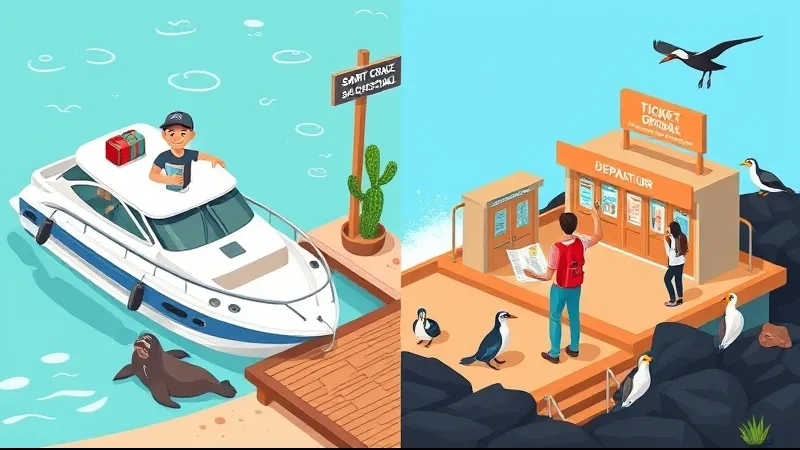
Is an organized Galápagos land tour better than DIY island hopping?
Neither option is objectively better — they solve different problems. An organized land tour mainly buys you four things: pre-booked seats on the inter-island speedboats, airport and dock transfers, certified naturalist guides for the visitor sites that legally require one, and a fallback plan when a boat or flight is cancelled. Independent island hopping buys you flexibility: your own hotels, your own pace, and the freedom to change plans mid-trip.
What neither option can do is promise wildlife. Giant tortoises in the wild, marine iguanas, sea lions, blue-footed boobies, penguins, sharks and rays are seen frequently, but sightings are never guaranteed, and no operator can honestly claim otherwise. Visitor sites and landing points are assigned by the Galápagos National Park Directorate, so no operator controls the exact itinerary either — weather and park allocation decide.
Decision rule: first visit, short trip or tight international connections → book a tour. Longer stay, single-island base, comfortable with Spanish and with arranging boats on the ground → go DIY.
What is actually included in a Galápagos island-hopping land tour?
A land tour is a bundle of logistics, not a magic pass. Broken into checkable components, a typical package covers:
- Hotel nights on Santa Cruz and/or San Cristóbal, sometimes Isabela
- Inter-island speedboat tickets, booked in advance rather than bought at the dock
- Transfers: airport to hotel, hotel to dock, including the Itabaca Channel ferry from Baltra and the road drive across Santa Cruz to Puerto Ayora
- Day tours with a licensed naturalist guide at sites where a guide is compulsory
- Some meals — full board, half board or breakfast only, depending on the package
- Park-authorized snorkelling gear on boat-based excursions
What is typically not included matters just as much: flights from Quito or Guayaquil to the islands (these are never included in the multi-day land tours covered on this site), the National Park entrance fee, the Transit Control Card, tips, drinks and personal expenses.
Inclusions vary considerably between packages, and they change. Rather than trusting a summary in an article, check live inclusions, availability, prices and traveller ratings in the GetYourGuide widget on the relevant tour page — that is where the current data lives.
What do you have to organize yourself if you travel independently?
DIY island hopping is entirely feasible, but it is a sequence of separate bookings and checkpoints, each of which has to work:
- Mainland flight to Baltra (GPS, for Santa Cruz) or San Cristóbal (SCY)
- Pre-flight baggage biosecurity inspection at Quito or Guayaquil, before check-in
- Transit Control Card, issued by the Galápagos Governing Council
- Park entrance fee, paid on arrival at the island airport
- Itabaca Channel ferry from Baltra, then a shared taxi or public bus across Santa Cruz to Puerto Ayora
- Hotel bookings on each island you plan to sleep on
- Speedboat tickets, bought separately at a dock agency or online, for each crossing
- Day tours, vetted and booked island by island once you arrive
Some experiences are genuinely reachable on your own — Tortuga Bay, Las Grietas, several highland ranches on Santa Cruz, town beaches on San Cristóbal. Boat-based sites are not: they require an authorized vessel, a licensed guide and an assigned time slot. Ecuador's Ministerio de Turismo maintains the registry of licensed tourism operators, and the Consejo de Gobierno de Galápagos (CGREG) handles the transit card.
How do the inter-island speedboats work, and what can disrupt them?
Public speedboats — lanchas — are the backbone of land-based travel, and they are also the single biggest source of disruption. The structure to understand:
- Departures are limited: broadly one morning departure and one afternoon departure per route, on small open-sea boats rather than ferries.
- Everything routes through Puerto Ayora on Santa Cruz. There is no direct San Cristóbal–Isabela service; that journey means two crossings and, in practice, a night on Santa Cruz.
- Water taxis shuttle you between the dock and the boat at both ends — expect wet feet and spray.
- Luggage is limited and stowed on deck or below; soft bags travel better than hard cases.
- A second biosecurity check applies when moving between islands, not just on arrival from the mainland.
Crossings are open-ocean and can be rough, particularly in the cool, windier months. Swell, mechanical faults or a port authority closure cancel departures outright, and a single cancelled crossing cascades: a missed connection on the wrong day becomes a missed return flight to the mainland. This is where an organized tour has measurable, unglamorous value — a rebooking desk, an alternative seat, and a hotel night arranged for you rather than by you at short notice. See getting there and moving between islands for the practical mechanics.
Which Galápagos sites legally require a certified naturalist guide?
This is the regulatory line most comparison articles skip. The great majority of the archipelago's protected visitor sites may only be entered accompanied by a naturalist guide licensed by the Galápagos National Park Directorate, aboard an authorized boat, within an assigned time slot. A small number of sites in and around the populated zones can be visited freely, on foot or by local transport.
Guide required (examples): North Seymour, Bartolomé, Santa Fé, Los Túneles on Isabela, Pinzón and the marine sites reached by boat.
Freely accessible (examples): Tortuga Bay, the grounds of the Charles Darwin Research Station in Puerto Ayora, La Lobería on San Cristóbal, Concha de Perla on Isabela.
In practice this means DIY travellers do not avoid guides — they simply buy guided day tours locally instead of having them pre-assigned. Site rules and guide licensing are published by the Galápagos National Park, and the Charles Darwin Foundation documents the species and ecosystems those rules protect.
How much planning time and travel time does each option really cost?
Compare hours, not currency. A self-planned two-island trip typically means researching mainland flights, booking several hotels, buying separate boat tickets for each crossing, and vetting day-tour providers island by island — realistically several evenings of work, plus follow-up messages in Spanish. An organized package compresses that into one booking decision.
On the ground, the difference is smaller than people expect. Both options absorb the same dead time: dock check-in windows, water-taxi waits, the Itabaca Channel ferry, the drive across Santa Cruz. A crossing between islands consumes roughly half a day either way, tour or not. The real difference is who absorbs the friction, not how fast you move.
One planning rule applies to both paths: sleep more than one night on each island. A single cancelled crossing should cost you an afternoon, not an entire island.
What does a typical land tour itinerary look like next to a DIY plan?
Here are two skeletons of the same length — a short island-hopping trip with a Santa Cruz base and one crossing — laid out side by side. All site names are subject to National Park assignment and weather.
Operator-structured version
- Arrival day: flight from the mainland, met at the airport, ferry and transfer to Puerto Ayora, hotel check-in
- Full day: guided highland and Research Station programme, or a boat day tour if assigned
- Crossing day: pre-booked speedboat seat to the second island, transfer to hotel, afternoon at a freely accessible site
- Full day: guided day tour with a licensed naturalist guide
- Return day: speedboat back and transfer, or a direct flight if the second island has an airport
Independent version
- Arrival day: same flight, then public bus or shared taxi from Baltra to Puerto Ayora, hotel booked separately
- Full day: Tortuga Bay and the Research Station grounds on foot, day tour booked at an agency in town
- Crossing day: speedboat ticket bought a day or two earlier at the dock, subject to availability
- Full day: walk-in day tour, chosen once you see what is running
- Buffer day: deliberately empty, in case the crossing back is cancelled
The divergences are precise: guaranteed seats versus tickets bought locally, pre-assigned guided days versus walk-in bookings, and whether you build a buffer night. If you want to see how packaged versions of this shape actually differ, compare current options on the 5-day Galápagos tour comparison page, where live availability and inclusions are shown in the booking widgets.
Which fees, permits and checks apply to every visitor, tour or not?
These obligations are identical whether you book a package or travel alone, and they are paid by you in either case. Ecuador's official currency is the US dollar.
- Transit Control Card (TCT): USD 20, issued by the Galápagos Governing Council, required before boarding and presented again on departure.
- Galápagos National Park entrance fee: USD 200 per foreign adult and USD 100 for children under 12, doubled since 1 August 2024 under Ordinance 001-CGREG, with reduced rates for Ecuadorian nationals and residents. Paid in cash on arrival at the island airport.
- In total: budget roughly USD 220 per adult on landing, on top of everything else. (Verified August 2026 — always confirm current amounts at galapagos.gob.ec before you travel.)
- Biosecurity inspection: baggage is screened before boarding on the mainland by the Galápagos Biosecurity and Quarantine Agency.
- Import ban: seeds, fresh produce, plants and animal products may not be brought to the islands.
- Maximum stay: 60 days per year as a tourist.
And to repeat the point that catches most first-time budgets: flights from Quito or Guayaquil are never included in the multi-day land tours this site covers. The tour price you see is always on top of the airfare and on top of the arrival fees.
Who benefits most from an organized land tour, and who should book independently?
A tour suits you if: it is your first visit; the trip is short and every day counts; you have tight international connections on the way home; you are travelling with children and want fixed transfers; or you would rather not negotiate boat tickets in Spanish at a dock counter.
DIY suits you if: you are staying longer; you plan to base yourself on one island rather than chase several; you have been before; your return date is flexible; or you have specific views about hotel category and location that a package will not match. Be honest with yourself about budget rooms — cheaper island accommodation sometimes means no hot water.
The hybrid is how many independent travellers actually operate, and it deserves more attention than it gets: book your own hotels and mainland flights, then buy only the guided day tours and the inter-island crossings. You keep control of where you sleep and how long you stay, while outsourcing the two things that genuinely require licences and advance seats.
How do you compare land tour options without relying on marketing claims?
Use a checklist instead of adjectives. For any package you are considering, ask:
- Is the guide licensed by the Galápagos National Park, and stated as such?
- Which nights are on which island — is the itinerary explicit, or vague about sleeping locations?
- Are crossings on public speedboats or private charters, and are seats confirmed at booking?
- What is the written policy if a crossing is cancelled — rebooking, extra hotel night, refund?
- Are day-tour sites described as subject to National Park assignment, or promised outright? Promised itineraries are a warning sign, not a feature.
- Is the operator registered with Ecuador's tourism authority?
Galápagos By Land is an independent comparison guide, not a tour operator, and runs no tours of its own. Current prices, availability and traveller ratings are not quoted in our articles because they change — they are shown live in the booking widgets on each tour page, including the 5-day island-hopping land tour. If you are still weighing formats entirely, our cruise versus land-based comparison covers that decision separately.
What can neither a tour nor a DIY trip guarantee?
Four things, stated plainly:
- Wildlife sightings. Species distribution and behaviour shift with season and ocean conditions. Encounters are frequent — they are not promises, and any operator who guarantees a particular animal is overselling.
- Specific visitor sites. Sites and time slots are allocated by the National Park and can be reassigned without notice.
- Crossings. Sea state and port authority decisions cancel departures. No booking overrides that.
- Weather patterns. The warm, wet season (roughly December to May) generally brings calmer seas and warmer water; the cool, dry garúa season (roughly June to November) brings choppier crossings and cooler water. Conditions change; the rules do not.
For context on visitor pressure, the National Park recorded 279,277 visitors in 2024 against 329,475 in 2023 — a useful reminder that demand fluctuates, not a forecast of how busy your dates will be. For species and seasonal ecology, rely on the Charles Darwin Foundation and the park authority rather than operator marketing.
How should you prepare once you have chosen an option?
Preparation that applies to both paths:
- Sun protection. Equatorial sun is intense even under cloud. Reef-safe sunscreen and a UPF long-sleeve layer for snorkelling do more than a hat.
- Motion sickness. If you are prone to it, take medication before boarding — not once the crossing is under way. Speedboat crossings are open-ocean and can be rough.
- A dry bag. Water-taxi transfers and wet landings are routine; phones and documents need protection.
- Cash in small US dollar notes. Card acceptance is patchy and ATM coverage thins out quickly outside Puerto Ayora and Puerto Baquerizo Moreno. Park fees are paid in cash on arrival.
- Wildlife distance. Park rules require staying at least 2 metres from animals, even when they approach you.
- Connectivity. Mobile data is limited and slow in places; download maps and tickets in advance. A booked tour normally centralizes emergency contacts, which is one less thing to improvise.
For health and vaccination questions, consult the CDC's Ecuador travel health page and your own doctor. On safety, the UK FCDO travel advice for Ecuador places the Galápagos Islands outside every area covered by its warnings, while advising normal caution for mainland transits — cite it directly rather than second-hand.
Frequently asked questions about land tours and DIY island hopping
Can you island hop in Galápagos without booking a tour?
Yes. Independent island hopping is legal and common. You book your own mainland flight, hotels and speedboat tickets, and buy guided day tours locally. The limitation is that most protected visitor sites still require a licensed naturalist guide and an authorized boat, so you buy guiding piecemeal rather than avoiding it.
Do you need a guide for every excursion?
No. Sites within or adjacent to the populated zones — Tortuga Bay, the Charles Darwin Research Station grounds, La Lobería, Concha de Perla — can be visited freely. The great majority of protected visitor sites across the archipelago require a naturalist guide licensed by the Galápagos National Park Directorate, on an authorized vessel with an assigned time slot.
How many islands can you realistically cover in a week?
Two or three inhabited islands is realistic; four is rushed. Every crossing routes through Puerto Ayora and consumes roughly half a day. Plan more than one night per island so a single cancelled crossing costs an afternoon rather than an entire island, and keep a buffer night before your mainland flight.
Are speedboat tickets available on the day?
Sometimes, but relying on it is risky. Departures are limited and boats are small, so seats sell out in busier periods and cancellations reshuffle demand. Independent travellers usually buy a day or two ahead at a dock agency. Organized tours pre-book seats, which is one of their most concrete inclusions.
What happens if a crossing is cancelled the day before a flight?
On a tour, the operator rebooks you and typically arranges an extra hotel night — check the written policy before booking. Independently, you rebook yourself, which may mean changing your mainland flight at your own cost. This is the single strongest practical argument for a buffer night before departure.
Is a land tour cheaper than a cruise?
Land-based travel is generally the lower-cost format because you pay for hotel nights rather than a berth, and you can scale accommodation to your budget. But comparisons only hold if you count what is excluded: mainland flights are never included in the land tours covered here, and park fees are paid separately on arrival by everyone.
Which islands have airports?
Baltra (GPS), a short ferry crossing from Santa Cruz, and San Cristóbal (SCY), which serves Puerto Baquerizo Moreno directly. Isabela has a small airstrip used by inter-island light aircraft rather than mainland flights. Most itineraries fly into one of the two main airports and out of the other, or return the same way.
Do you pay park fees separately when on a tour?
Yes, in almost all cases. The National Park entrance fee is USD 200 per foreign adult and USD 100 for under-12s, and the Transit Control Card is USD 20 — roughly USD 220 per adult, paid on arrival, usually in cash. (Verified August 2026; confirm current amounts at galapagos.gob.ec.) Packages that include them state so explicitly.
Can children join island-hopping tours?
Generally yes, and reduced park entrance rates apply to under-12s. Consider the crossings honestly, though: open-ocean speedboat transfers can be rough and last a good part of a morning. Families often do better with fewer islands, longer stays, and a base on Santa Cruz with day trips out. Check age policies on each tour page.
Sources
- Dirección del Parque Nacional Galápagos (galapagos.gob.ec) — visitor-site rules, naturalist guide licensing, entrance fee amounts and arrival procedures.
- Consejo de Gobierno del Régimen Especial de Galápagos (gobiernogalapagos.gob.ec) — Transit Control Card requirements, online pre-registration and visitor statistics.
- UNESCO World Heritage Centre — Galápagos Islands — protected-area status and the terms of the World Heritage listing.
- Charles Darwin Foundation — species distribution, seasonal ecology and research on the archipelago.
- Agencia de Bioseguridad y Cuarentena para Galápagos (ABG) — baggage inspection rules and prohibited items for entry to the islands.
- Ministerio de Turismo del Ecuador — servicios y catastro turístico — registry of licensed tourism operators and agencies.
- Galápagos Conservancy — National Park rules — visitor conduct rules, including the minimum distance from wildlife.
- FCDO travel advice — Ecuador — official UK government safety guidance, including the status of the Galápagos Islands.
- CDC — Ecuador traveller health — vaccination and health recommendations for travel to Ecuador and Galápagos.