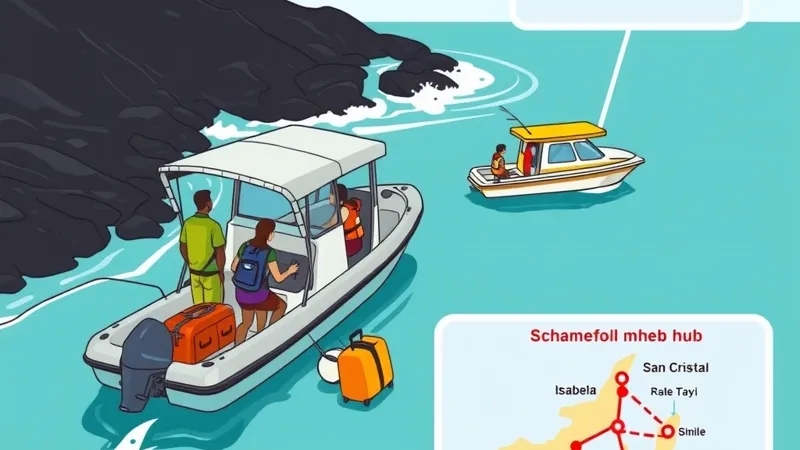
How do inter-island speedboats in the Galapagos work?
Quick answer: Inter-island speedboats are shared passenger transfers between inhabited islands, not cruises or wildlife excursions. You book a specific departure, check in at the harbor, complete required checks and may take a small water taxi out to the boat. Santa Cruz is the usual connection hub for San Cristobal and Isabela. Conditions, departure arrangements and journey times vary.
Treat each main crossing as a several-hour journey and confirm the expected sailing duration for your departure. Sailing time is not hotel-to-hotel time: reaching the harbor, inspections, boarding and onward transport extend the journey.
Which islands can you reach by scheduled passenger speedboat?
The main routes connect Santa Cruz with San Cristobal and Isabela. Use these route summaries in either direction, checking the departure town carefully:
- Santa Cruz–San Cristobal: Puerto Ayora to Puerto Baquerizo Moreno. Allow several hours at sea, subject to the carrier’s estimate and conditions. Normally no island connection is needed.
- Santa Cruz–Isabela: Puerto Ayora to Puerto Villamil. Allow several hours at sea, with the same qualifications. Normally no island connection is needed.
- San Cristobal–Isabela: generally plan via Santa Cruz, with separate crossings and a connection allowance. Do not assume a regular direct service.
Treat Floreana separately: confirm passenger-service availability and a workable return before including it. The Ecuador Ministry of Tourism provides broader destination context, not confirmation of a particular sailing.
How much time should you allow for check-in and connections?
Follow your provider’s required arrival time, then add a personal buffer. There is no universal Galapagos speedboat check-in time to apply to every ticket.
Account for the full sequence: hotel transfer, check-in, baggage inspection, boarding, sailing, disembarkation and onward hotel transfer. Ask whether the stated meeting time refers to the representative’s desk or the pier.
Morning and afternoon departures are planning conventions, not guaranteed schedules. Hypothetically, a morning arrival in Santa Cruz might connect with an afternoon departure to Isabela; that is not a bookable timetable, and a delay could break the connection.
Editorial advice: avoid a tight same-day connection to a mainland or international flight. An overnight buffer on the island from which you will access your departure airport is prudent when missing the flight would disrupt the rest of your trip.
How do you book a crossing and compare inclusions?
Compare the actual transport arrangements, not just the ticket label. A transport-only crossing is different from a day tour with excursions and a return journey.
Before paying, confirm:
- Route direction, travel date and passenger identification requirements.
- Actual carrier, meeting point and required check-in time.
- Baggage allowance and arrangements for oversized items.
- Accessibility and available boarding assistance.
- Whether water taxis are included or separately payable.
- Cancellation, missed-departure and rebooking terms.
Galapagos By Land is an independent editorial and affiliate comparison guide, not a tour operator. We may earn a commission from affiliate bookings. For packages that combine island stays, compare land-based options; GetYourGuide widgets on the relevant pages provide live prices and ratings.
Ecuador uses US dollars. Confirm separately payable local charges and accepted payment methods. Budget beyond the boat ticket for mandatory arrival formalities and fees. Flights from mainland Ecuador to the islands are never included in the multi-day land tours this site covers.
What happens at the harbor and during boarding?
Find the correct check-in representative before joining a boarding queue. Confirm your name on the passenger list and the boat serving your departure. Baggage checks, waiting and possible water-taxi transfers follow, although their order and facilities vary by port.
A small transfer boat may take passengers from the pier to the speedboat. Boarding can involve steps, uneven surfaces and moving boats; do not assume step-free access or help with heavy luggage.
Departure-day checklist:
- Keep identification and booking confirmation accessible.
- Carry medication and drinking water in your day bag.
- Protect electronics and documents from spray.
- Confirm boarding assistance in advance.
- Follow crew instructions on seating and life jackets.
Reserved seats, onboard toilets and boat layouts are not uniform. Ask about the specific vessel rather than relying on generic photographs.
What luggage and food can you take between islands?
Carrier baggage limits and biosecurity restrictions are separate requirements. Confirm bag size, weight, quantity and excess-baggage arrangements directly; airline allowances do not automatically apply.
Consult the Galapagos Biosecurity Agency for current inspection guidance and restrictions involving food, plants, seeds and animal products. Do not assume that food bought on an island is automatically suitable for onward transport. Ask before carrying uncertain items and present them for inspection as directed.
Clean footwear, securely closed bags and a compact waterproof day bag make inspections and transfers easier. Keep essentials with you because stored luggage may be inaccessible during the crossing.
What are sea conditions like, and how can you prepare for motion sickness?
Small passenger boats can experience substantial movement and spray. Seasonal patterns cannot predict an individual crossing, and morning departures are not guaranteed to be calmer.
Check INOCAR for ocean and marine-weather information, alongside departure updates from your provider. A regional forecast is not a comfort guarantee for your boat.
The CDC Yellow Book provides evidence-based motion-sickness guidance. Ask a pharmacist or clinician about suitable medication before travel, especially for children or during pregnancy. Follow professional advice and product directions rather than choosing treatment at the harbor.
Tell the crew if you feel unwell. Follow their seating and life-jacket instructions; no seat can be promised universally comfortable.
What should you do if a crossing is delayed or canceled?
Confirm the departure status before buying replacement transport. Weather, port restrictions and operational issues can alter departures. DIRNEA, Ecuador’s maritime authority, is the official reference for maritime notices; your carrier should explain how restrictions affect your booking.
- Ask the carrier or booking contact about cancellation, rebooking and refund options.
- Notify your next hotel and any onward transfer provider.
- Preserve written notices, booking records and receipts.
- Arrange an extra overnight stay if necessary.
Carrier terms, third-party booking conditions and travel-insurance coverage are separate. Do not assume another boat or flight will be available. Keeping itinerary flexibility is editorial advice, not an official minimum-buffer requirement.
How do speedboats fit into a land-based itinerary?
Every island move costs more usable holiday time than its sailing duration suggests. Staying on an island longer avoids repeated packing and harbor formalities. Adding Santa Cruz, San Cristobal or Isabela broadens your base choices but reduces time available for activities.
Use the hotel-base guide to compare stays and the airport-transfer guide to plan arrival and departure logistics. Baltra airport access uses separate land and channel transfers, not the inter-island speedboat service described here.
The Galapagos National Park Directorate provides visitor rules. Excursion visit sites and landing points are assigned by the National Park; no operator can promise a specific site or exact itinerary, because weather and park rules govern access. Wildlife sightings are frequent but never guaranteed, and sightings during passenger crossings are incidental.
What else should you know before taking a speedboat?
Confirm boat-specific details before booking, particularly facilities and assistance.
Is there a direct San Cristobal–Isabela service, and should you book ahead?
Generally plan via Santa Cruz, not a regular direct service. Booking ahead is sensible when hotel dates are fixed, but confirm each departure and connection before committing.
Can you connect to the airport the same day?
It may be possible, but it is not a dependable default. Confirm every transfer stage; an overnight buffer is prudent before a flight you cannot afford to miss.
Are water taxis and luggage included?
Inclusions vary. Confirm water-taxi charges and the booked carrier’s baggage allowance in writing; do not assume either follows another boat’s policy.
Do boats have toilets, and can children or travelers with limited mobility board?
Toilets and access arrangements vary by vessel. Confirm facilities, child-appropriate safety equipment and assistance before booking. Steps and transfers between moving boats may make some services unsuitable for particular needs.
Are crossings wildlife tours?
No. They are passenger transport, not wildlife excursions. Any sighting is incidental and never guaranteed.
Sources
Official guidance and your booked service’s written terms answer different questions. Institutional guidance does not establish a particular boat’s schedule or facilities.
- Galapagos National Park Directorate: visitor rules and excursion-site management.
- Galapagos Biosecurity Agency: inspection guidance and biological-material restrictions.
- INOCAR: ocean conditions and marine-weather information.
- DIRNEA: maritime notices and navigation restrictions.
- CDC Yellow Book: motion-sickness prevention and treatment considerations.
- Ecuador Ministry of Tourism: general island destination context, rather than sailing availability.
For variable schedules, check-in deadlines, luggage and cancellation conditions, use the identified carrier’s written terms and your booking confirmation as the primary evidence.