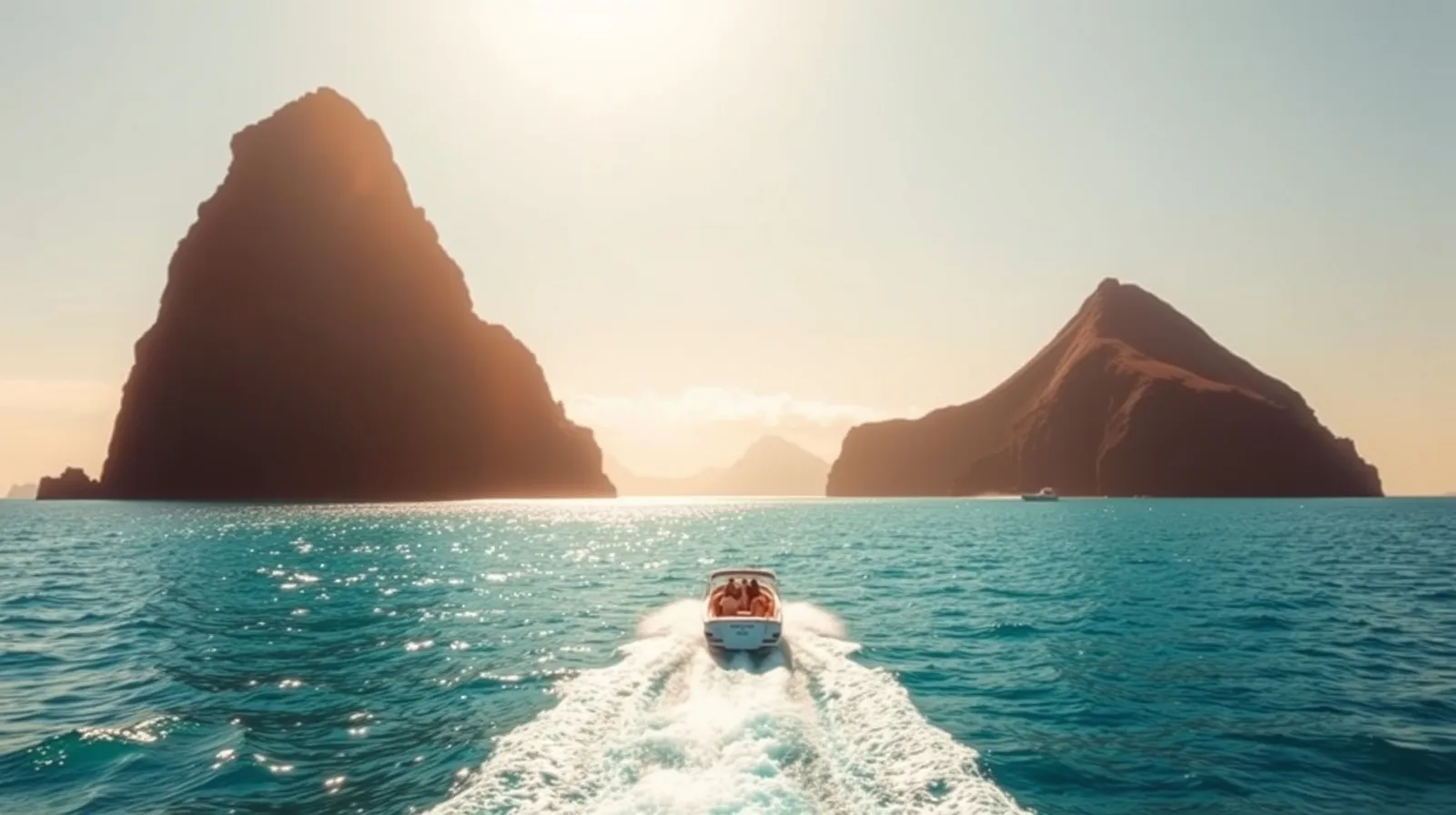
How do you get to the Galapagos?
You fly from mainland Ecuador — there is no other practical way in. No international flight lands in the islands: every visitor arrives on a domestic flight from Quito (UIO) or Guayaquil (GYE) into one of two airports, Baltra (GPS), the gateway for Santa Cruz and Puerto Ayora, or San Cristóbal (SCY). The flight takes roughly two hours from Guayaquil, and about half an hour more in total from Quito, because Quito departures normally make a technical stop in Guayaquil on the way.
The journey also has a paperwork side that surprises first-timers: before boarding on the mainland you obtain the $20 Transit Control Card (TCT), and when you land in the islands you pay the $200 National Park entrance fee in cash ($100 for children under 12). That is $220 per adult on top of any tour or flight you have booked — no package pays it for you. The rest of this guide takes the trip in order: mainland gateway, island airport, paperwork, and the last leg to your hotel.
The two mainland gateways: Quito and Guayaquil
All Galapagos flights start at Quito's Mariscal Sucre airport (UIO) or Guayaquil's José Joaquín de Olmedo airport (GYE). As of our latest check (August 2026), the route is flown by Avianca Ecuador and LATAM Ecuador — if an older guide lists a third airline, be aware that it stopped flying back in 2023. We deliberately do not print timetables or fares here: schedules and prices change with the season, so treat the mechanism as fixed and check the day's flights when you book.
Practical differences between the two:
- Guayaquil (GYE) is the shorter hop — around two hours in the air — and since Quito departures typically stop there anyway, it is the more direct gateway.
- Quito (UIO) makes sense if you want to see the capital or arrive there internationally; count on roughly two and a half hours of total travel to the islands including the stop.
An honest word about Guayaquil. The UK Foreign Office (FCDO) advises against travel to the city of Guayaquil — but it explicitly exempts airside transit through the airport. In plain terms: changing planes at GYE without leaving the terminal is outside the advisory, and that is exactly what the vast majority of Galapagos travellers do. If your plans involve staying in the city itself, read the current official advice first and decide with open eyes. The islands themselves sit outside all advised-against areas.
Baltra or San Cristóbal: which airport do you fly into?
The archipelago has two airports with mainland connections, plus one that is inter-island only:
- Baltra (GPS) — the Seymour Ecological Airport on Baltra island, the gateway for Santa Cruz and Puerto Ayora and the busier of the two. There is no town at the airport: you continue by bus and ferry (next section).
- San Cristóbal (SCY) — the airport of Puerto Baquerizo Moreno, just a few minutes from the centre of town. If your tour starts on San Cristóbal, arrival is refreshingly simple.
- Isabela (IBB) — General Villamil airport handles only small inter-island planes: the runway is short and there are no mainland flights. You cannot fly to Isabela from the continent.
Fly into the airport your first night is booked on. Multi-day land tours state their starting island — our land tour pages show it for every itinerary — and getting this wrong means an extra inter-island crossing on day one.
From Baltra to Puerto Ayora the transfer is a small journey of its own: a bus from the terminal to the Itabaca Channel (about 10 minutes), the ferry across the channel (about 10 minutes), then a bus to Puerto Ayora (about 45 minutes) — call it an hour and a quarter door to door, and around $11 per person in total with the public ferry, though local fares change. Many tours include this transfer with a driver waiting at arrivals; it is one of the small ways a package quietly earns its price.
The paperwork: TCT before boarding, park fee on arrival
Two payments frame the flight, one at each end.
Before you board — the Transit Control Card ($20). Issued by the Galapagos Governing Council at the Quito and Guayaquil airports, with online pre-registration available on the Council's portal; agencies can pre-register travellers up to 48 hours ahead. The official guidance is to arrive 3 hours before your flight. You need a valid passport or ID card and a return ticket showing a stay within the permitted window. The card is mandatory for every tourist; island residents are exempt.
When you land — the National Park entrance fee ($200 adult, $100 under 12, cash). Paid at the airport counter on arrival in the islands. Keep the receipt with your passport for the rest of the stay, and carry the exact amount in your hand luggage — the queue is not the place to discover your dollars are in the checked bag.
Behind the TCT sits the 60-day rule: tourists may spend at most 60 days per calendar year in the Galapagos, cumulative across all entries — and each entry pays its own TCT. For the full breakdown of both fees, who pays what and why the park fee doubled, see our entrance fee guide.
Moving on: flights and boats between the islands
Once you are in, island hopping runs on two systems. Emetebe flies small inter-island planes between Baltra, San Cristóbal and Isabela; the round-trip fares published on the airline's own site (read August 2026 — fares change) were $147.01 Baltra–Isabela, $153.00 San Cristóbal–Isabela and $191.50 Baltra–San Cristóbal. The aircraft are genuinely small and the baggage allowance is tight — pack accordingly.
The budget alternative is the inter-island speedboat, the workhorse of independent island hopping. Crossing times and fares vary by route, sea state and operator, so check them locally or with your tour — and note that on a guided multi-day itinerary the crossings are normally organised for you. If you are weighing up organising all of this yourself versus letting a land tour handle it, our comparison of cruise versus land-based travel sets out both sides honestly.
What no ticket includes — budgeting the way in
Whatever you book, three lines stay on your bill and outside every advertised price:
- Flights from the mainland — multi-day land tours are priced from the islands, flights excluded.
- $200 National Park fee per foreign adult ($100 under 12), cash on arrival.
- $20 Transit Control Card per person, at the mainland airport.
That is $220 per adult in fees before the first sea lion. It is not a hidden cost once you know it — but plenty of "cheap Galapagos" arithmetic quietly leaves it out. Our tour pages declare it on every itinerary, so the price you compare is the price that exists. If you are still choosing the trip itself, start with the length question: 4-day tours compared or 5-day tours compared.
Browse Galapagos land tours, island by island
Frequently asked questions
Can you fly directly to the Galapagos from outside Ecuador?
No. There are no international flights into the islands: everyone connects through mainland Ecuador and flies domestically from Quito or Guayaquil, roughly two hours in the air.
Which airport should I fly into, Baltra or San Cristóbal?
The one your first night is booked on. Baltra (GPS) serves Santa Cruz and Puerto Ayora via a bus-ferry-bus transfer of about an hour and a quarter; San Cristóbal (SCY) is minutes from Puerto Baquerizo Moreno. Isabela's airstrip handles inter-island planes only.
Is it safe to transit through Guayaquil?
The UK FCDO advises against travel to the city of Guayaquil but explicitly exempts airside transit through the airport. Changing planes without leaving the terminal — what most Galapagos travellers do — sits outside the advisory. Check the current official advice before planning time in the city itself.
What is the Transit Control Card and when do I get it?
A mandatory $20 migration-control card issued by the Galapagos Governing Council at the Quito or Guayaquil airport before boarding, with online pre-registration available. Arrive 3 hours early with a valid passport or ID and a return ticket within the 60-day limit.
How much do I pay on arrival in the islands?
$200 per foreign adult ($100 per child under 12) for the National Park entrance fee, in cash at the arrival airport. Together with the $20 TCT that makes $220 per adult, never included in tour prices.
How long can I stay?
Up to 60 days per calendar year, cumulative across all entries — the limit is enforced through the Transit Control Card and your return ticket, and each entry pays its own TCT.
Sources
Figures verified in August 2026 and re-checked against the official sources when this page is updated.
- Galapagos Governing Council — gobiernogalapagos.gob.ec — Transit Control Card FAQ: cost, documents, timing, 60-day rule
- Galapagos National Park — galapagos.gob.ec — National Park entrance fee rates
- UK FCDO travel advice for Ecuador — Guayaquil advisory and the airside transit exemption
- Emetebe — flights.emetebe.com.ec — inter-island round-trip fares